
Tree Pruning vs Tree Lopping: What’s the Difference?
A Local Guide to Tree Lopping vs Pruning in Cairns
Written by James Wilde, Head Arborist & Director of Coral Coast Tree Care, With 20 Years of Industry Experience in Far North Queensland
If you’ve been standing in your backyard staring up at an overgrown tropical tree and thinking, “That giant needs a serious haircut,” you’re definitely not alone. In Far North Queensland, our warm climate, high rainfall and heavy wet seasons mean trees can grow at an extraordinary rate. Before you know it, a manageable young tree becomes a sprawling canopy that blocks natural light, drops leaves into your pool, or hangs heavily over your roofline.
It’s a question we hear all the time from local homeowners: what is the real difference between tree pruning vs tree lopping? The answer can be a little confusing because many Cairns property owners use tree lopping as a general term for cutting back an overgrown tree. Even our customers commonly search for professional tree lopping when they need branches reduced, removed or cleared away from their homes.
However, in professional arboriculture, appropriate tree pruning and indiscriminate tree lopping can represent two very different approaches. One carefully manages the tree with consideration for its health, structure and surroundings. The other can involve excessive or poorly positioned cuts that create weak regrowth, ongoing maintenance problems and potentially greater risks in the future.
So, when comparing tree lopping vs pruning, the real question isn’t simply what the work is called; it’s whether the tree is being cut correctly.
Tree Pruning vs Tree Lopping: The Short Answer
Professional tree pruning selectively removes particular branches to achieve a clear purpose. This might include removing dead or damaged limbs, creating clearance from a roof or managing selected areas of an overgrown canopy. Inappropriate tree lopping generally involves cutting branches back indiscriminately, removing too much canopy, or leaving large, poorly positioned stubs without considering how the tree will respond.
Professional tree pruning | Inappropriate tree lopping |
|
|
|
|
|
|
|
|
|
|
|
|
|
|
The right approach will depend on the individual tree. Its species, size, condition, location and surrounding property all need to be considered before work begins.
What is Tree Lopping?
Tree lopping is one of the most common phrases used by homeowners looking for help with an overgrown tree. In everyday language, it can mean trimming branches, reducing a canopy or cutting a tree back from a building. Most people using the phrase are not asking for their trees to be damaged; they are looking for a qualified arborist to manage branches that have become too large, heavy or close to their home.
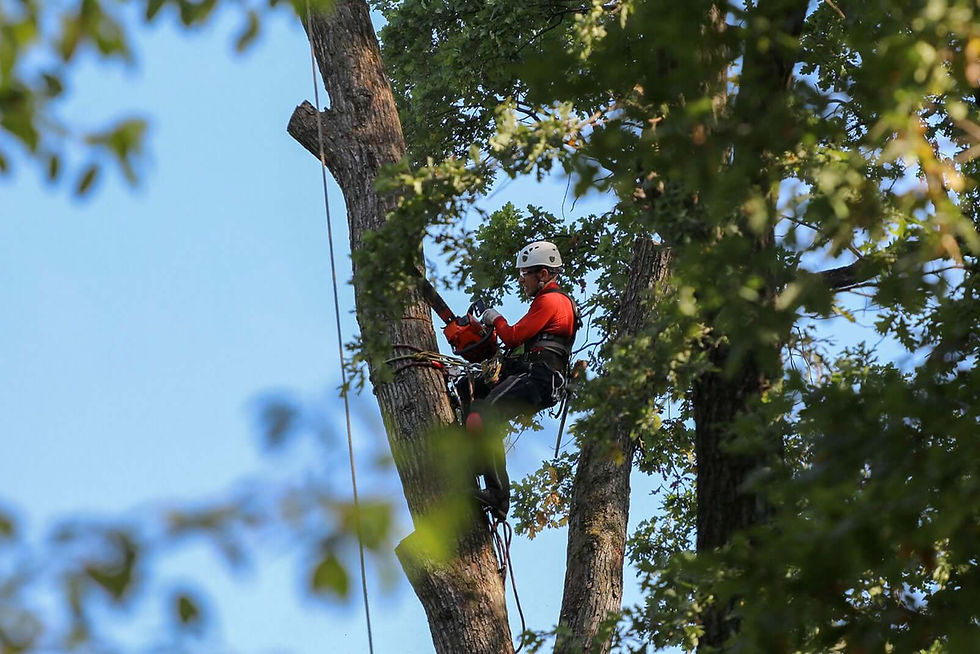
Within professional arboriculture, however, inappropriate lopping refers to cutting branches or stems without selecting suitable pruning points or considering the tree’s future response. It may involve removing an excessive proportion of the canopy or leaving large stubs that the tree cannot effectively grow around. At Coral Coast Tree Care, we provide professionally assessed tree lopping and pruning, not indiscriminate cutting without regard for the tree’s structure.
What Problems Can Inappropriate Lopping Cause?
Place the Tree Under Stress
Leaves allow a tree to produce energy through photosynthesis. Removing too much of the canopy at once can place the tree under considerable stress and affect its ability to maintain normal growth and defence processes. The amount you can remove varies by species and individual tree. There is no universal percentage that is suitable in every situation.
Leave Large, Poorly Positioned Wounds
Branches should be removed or shortened at appropriate pruning points. Cutting through large branches indiscriminately can unnecessarily expose significant areas of wood. Depending on the tree’s species, health and growing environment, this may increase the potential for decay, pest activity and a poor wound response.
Trigger Weak or Excessive Regrowth
Heavy cutting can stimulate rapid shoots from dormant or adventitious buds. This is known as epicormic growth. Although the tree may quickly look green again, rapid regrowth does not necessarily mean it has recovered successfully. New shoots may be densely spaced or poorly attached and can require ongoing corrective pruning.
Create More Maintenance
This is the frustrating part for many property owners. A tree may initially look smaller after heavy cutting, only to respond with a dense mass of vigorous new growth. Instead of solving the original problem, inappropriate lopping can lead to more frequent maintenance and additional expense.
Permanently Alter the Tree’s Shape
Severe cutting can affect a tree’s natural form and appearance. Corrective pruning may be possible, but restoring a balanced canopy can take several stages and may not always be achievable.
What is Professional Tree Pruning?
Professional tree pruning is a more considered approach. Rather than simply cutting a tree back as far as possible, an arborist identifies particular branches and selects suitable pruning points to achieve the required outcome. Think of it as the difference between giving your tree a carefully planned haircut and simply taking to it with the clippers. Pruning may be recommended to:
Remove dead, damaged or defective branches.
Create appropriate clearance from roofs and structures.
Manage branches growing over driveways or outdoor areas.
Address storm damage.
Improve selected areas of canopy structure.
Manage growth towards neighbouring properties.
Correct some of the effects of previous poor pruning.
Develop stronger structure in younger trees.

Before recommending work, a qualified arborist should consider the tree’s species, health, structure and likely response, along with access and anything nearby that could be affected.
Why Does the Position of a Pruning Cut Matter?
One of the most important differences between professional tree pruning vs tree lopping is where each cut is made. Branches are generally pruned in relation to the branch collar; the slightly swollen area where a branch joins its parent stem. Retaining this important area supports the tree’s natural ability to respond to and compartmentalise the wound.
Trees do not heal damaged tissue in quite the same way people do. Instead, they gradually form new tissue around the wound while containing the affected area within the existing wood. That is why leaving an unnecessarily long stub or cutting too closely into the trunk can interfere with the tree’s natural response—the position and size of each cut matter.
Common Types of Professional Tree Pruning
Deadwooding
Deadwooding involves removing identified dead branches from the canopy. This can reduce the likelihood of foreseeable dead-branch failure over roofs, driveways, paths and frequently used outdoor areas. No tree can be made completely risk-free, but removing identified dead or damaged branches can address particular hazards visible at the time of inspection.
Crown Lifting
Crown lifting selectively removes lower branches to provide suitable clearance over driveways, paths, lawns, buildings or other areas. Care is needed to avoid removing too many lower branches or leaving the tree with an excessively high and poorly balanced canopy.
Selective Canopy Reduction
Canopy reduction shortens selected branches while retaining appropriate growth points and the tree’s natural form wherever possible. It can be used to manage branches growing towards a roof, structure or neighbouring property. It does not mean cutting the entire canopy back to an arbitrary height.
Crown Thinning
Crown thinning involves selectively removing branches from within the canopy to manage density while retaining its overall size and shape. It is not automatically appropriate for every tree. Excessive thinning can alter weight distribution and create other structural concerns, so the work must be based on the individual tree's condition and needs.
Formative & Corrective Pruning
Formative pruning is generally undertaken on younger trees to encourage suitable branch structure as they develop. Corrective pruning may help manage poor previous cuts, damaged branches or excessive regrowth. Depending on the tree, this work may need to be completed gradually over several visits.
Why Cairns Trees Need the Right Approach
Living in the tropics brings tree care challenges that homeowners in cooler climates do not always encounter. Cairns trees grow in a warm, humid environment with high seasonal rainfall. Many tropical species can produce vigorous new growth after being heavily cut, but fast regrowth should not be mistaken for good structural recovery.
Warm and humid conditions can also favour decay organisms, particularly where large or poorly positioned wounds have been created. Our trees may also be exposed to:
Intense wet season rainfall
Waterlogged or disturbed soil
Strong tropical winds
Cyclonic weather
Rapid seasonal growth
Previous storm damage
Restricted growing space around homes and pools
Two trees of the same species can require completely different recommendations depending on their condition, previous pruning, root environment and exposure. That is why a qualified arborist should assess the individual tree rather than applying the same cutting height or reduction percentage to every canopy.
Does Pruning Make a Tree Safer During Cyclone Season?
Appropriate pruning can address particular concerns identified during an inspection, such as dead branches, storm-damaged limbs, cracks or selected areas of unsuitable growth. This may reduce specific foreseeable risks. However, no pruning method can make a tree cyclone-proof or guarantee that it will not fail during severe weather.
Simply thinning every canopy is not the answer. Excessive pruning can stress the tree, alter its weight distribution and stimulate unwanted regrowth. The safest approach depends on the tree’s species, condition, structure, location and exposure. It is sensible to arrange an assessment if you notice:
Broken or hanging branches
Dead sections of canopy
Cracks or splits
Fungal growth or visible decay
Sudden leaning or movement
Exposed or damaged roots
Changes following excavation or construction
Recent storm damage
Branches affecting important access areas or structures
If a tree has fallen, shifted suddenly or created an immediate hazard, keep people away from the area and contact an experienced emergency tree removal team.
Is Tree Lopping Illegal in Cairns?
Professional tree pruning is not automatically prohibited on private property. However, some properties are affected by Cairns Regional Council planning controls that regulate vegetation damage. Depending on the property and proposed work, relevant considerations may include:
Vegetation Management Overlay
Hillslopes Overlay
Landscape Values Overlay
Potential Landslip Hazard Overlay
Property zoning
Existing development-approval conditions
Whether the tree is on private, common or council-controlled land
Council’s definition of vegetation damage can include cutting down, ringbarking, poisoning or otherwise damaging vegetation. Significant or excessive pruning may therefore require written council clarification or approval in some circumstances.
Property owners should confirm the applicable requirements before authorising substantial pruning or tree removal. Where required, Coral Coast Tree Care can arrange a Level 5 arborist report or tree assessment to support the property owner’s council enquiry or application. Council makes the final determination and Coral Coast Tree Care will not undertake regulated vegetation damage without the necessary approval or written confirmation.
Tree Lopping vs Pruning: Which Does Your Tree Need?
When comparing tree lopping vs pruning, the decision should not be based solely on how much smaller you want the tree to become. A qualified arborist should first consider:
What problem needs to be addressed?
Is the desired outcome realistic for that tree species?
Can the tree be retained and managed through appropriate pruning?
How much foliage can reasonably be removed?
Where should the pruning cuts be positioned?
Could the proposed work create new structural or maintenance problems?
Would complete tree removal be a more practical option?
Are council, neighbour or body corporate approvals required?
Sometimes selective pruning is the best solution. In other situations, repeatedly reducing a large tree that has outgrown its available space may not provide a practical long-term outcome. An honest assessment should explain the options rather than promise that every tree can be made permanently smaller.
Why Choose a Qualified Arborist?
Tree pruning involves much more than operating a chainsaw. The decisions made during the work can affect the tree for many years. Coral Coast Tree Care is led by Head Arborist James Wilde, who brings 20 years of industry experience, including professional tree climbing, vegetation management and supervising crews throughout regional and remote Far North Queensland. Our qualified and experienced team:
Assesses each tree individually
Recommends practical and appropriate work
Uses professional climbing and rigging equipment
Works in accordance with recognised industry practices
Provides clear, detailed quotations
Considers surrounding structures, gardens and access
Identifies when council clarification may be necessary
Mulches and removes green waste where included in the quotation
Keeps clients informed throughout the process
Our pruning work is undertaken with reference to AS 4373-2007, Pruning of Amenity Trees, where applicable.
The Verdict: Tree Pruning vs Tree Lopping
So, which is better: tree pruning or tree lopping? Terminology matters less than the quality of the work. Many Cairns customers use tree lopping to describe professional tree cutting, canopy reduction or branch removal. There is nothing wrong with using the phrase that homeowners recognise and search for. The real concern is inappropriate lopping: excessive or indiscriminate cutting that doesn't consider suitable pruning points, tree structure, or future regrowth.
Professional pruning starts with an assessment, identifies a clear objective and considers how the tree is likely to respond. It achieves the required clearance or canopy-management outcome without simply cutting every branch back as far as possible. If you are standing in your backyard wondering what on earth to do with that rapidly growing tropical tree, you do not need to work out the technical answer on your own.
Contact Coral Coast Tree Care Today
The team at Coral Coast Tree Care can inspect the tree, explain the available options and provide a clear, no-obligation quotation.
Your Questions Answered
What is the difference between tree pruning and tree lopping?
Professional pruning selectively removes identified branches using appropriate pruning points and with consideration for the tree’s health, structure and surroundings. Inappropriate lopping generally involves indiscriminate or excessive cutting that may leave unsuitable stubs and stimulate poorly attached regrowth.
However, many customers use tree lopping as a general term for professional tree cutting and maintenance; how the work is assessed and completed matters more than the label used.
Can a tree recover after being heavily lopped?
It depends on the tree’s species, health, condition and the severity of the cuts. Some tropical trees produce vigorous regrowth, but this does not necessarily restore their original structure. Corrective pruning may be possible, although it can require several stages over time. In severe cases, the original damage may not be fully correctable.
How often should trees be pruned in Cairns?
No single schedule suits every tree. Pruning frequency depends on the species, age, condition, location, previous work and potential consequences of branch failure. Trees with visible defects, recent storm damage or frequently used areas beneath them may require more regular assessment.
Should I have my trees pruned before cyclone season?
It is sensible to have concerning trees assessed before the wet season, particularly if you notice dead, damaged, cracked or hanging branches. Pruning cannot make a tree cyclone-proof, and work should be based on the condition of the individual tree rather than automatically thinning every canopy.
Can you prune branches growing over a neighbouring property?
Yes, depending on the tree’s location and the extent of the proposed work. Written approval from the neighbouring owner may be required prior to works due to extensive pruning required. Pruning should not leave the tree unstable, unbalanced or unnecessarily damaged.
Do I need council approval before pruning a tree?
Possibly. Requirements depend on the property’s zoning, planning overlays, existing approval conditions, and the extent of the proposed vegetation damage. Property owners should obtain written council clarification or the required approval, where needed. Coral Coast Tree Care can arrange a Level 5 arborist report to support an application if needed.
Can Coral Coast Tree Care tell me whether pruning or removal is more appropriate?
Yes. Our qualified and experienced arborists can inspect the tree, discuss the available options and provide a detailed written quotation. Where a formal assessment is required for council, development, insurance or tree-risk purposes, we can also arrange a Level 5 arborist report.
Comments